
Polyvinyl chloride (PVC) is one of the world's most widely used thermoplastic polymers, serving industries ranging from construction and infrastructure to electrical products, packaging, and various industrial applications.
For international buyers, sourcing PVC from Iran can provide access to established petrochemical production capacity and a broad regional supply network. However, purchasing PVC for international delivery requires more than simply comparing quoted prices. Product grade, technical specifications, packaging, origin, loading location, transportation, and commercial terms can all affect the final transaction.
For buyers evaluating PVC supply from Iran, understanding these factors is essential before requesting a formal quotation or placing an order.
What Is PVC?
Polyvinyl chloride, commonly known as PVC, is a thermoplastic polymer produced through the polymerization of vinyl chloride monomer.
PVC is generally used in two broad forms:
Rigid PVC
Flexible PVC
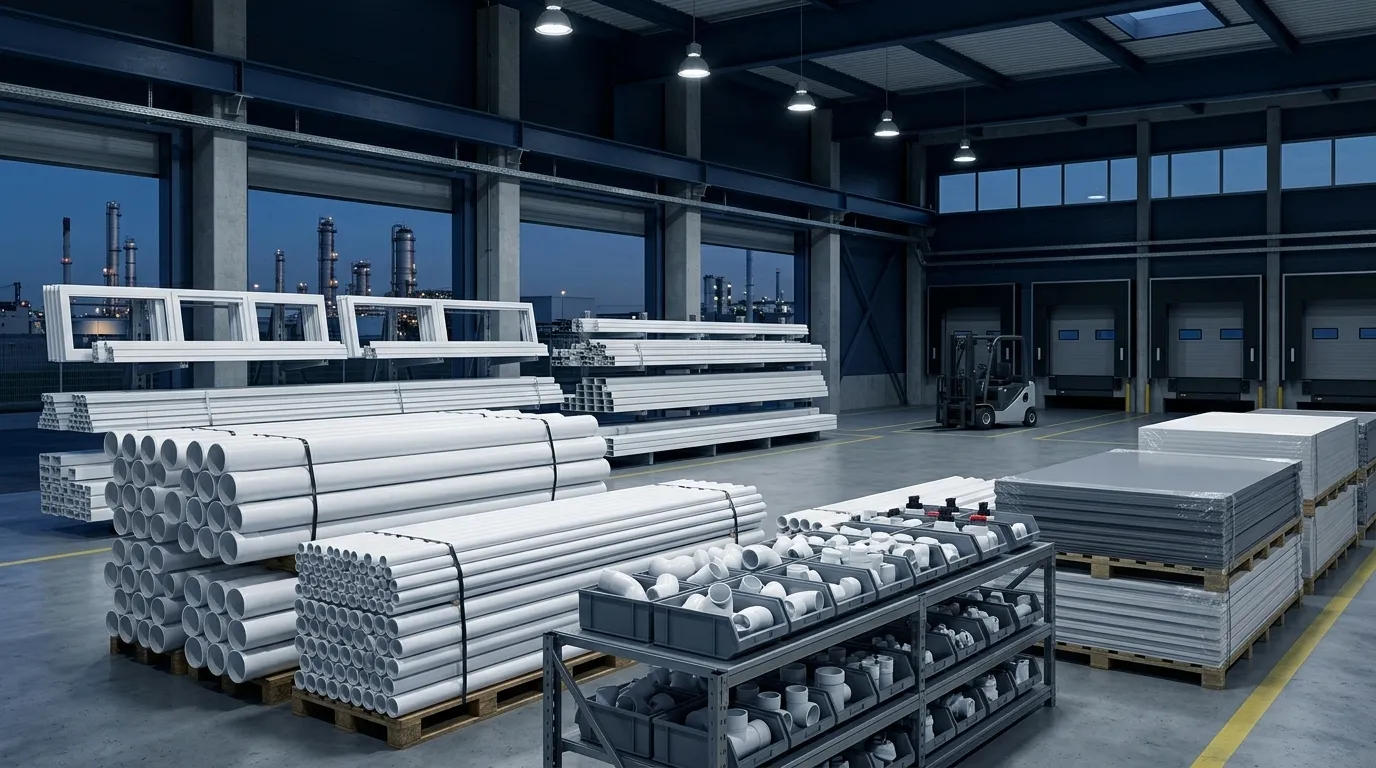
Rigid PVC is commonly used for pipes, fittings, profiles, sheets, and construction products, while flexible PVC is used in applications such as cables, flooring, films, synthetic leather, and coated products.
In international petrochemical trade, PVC is commonly supplied as PVC resin, which is then processed by manufacturers according to their specific production requirements.
For buyers who are new to sourcing petrochemical products from Iran, understanding the overall procurement process is also important. Our guide on How to Buy Petroleum & Petrochemical Products from Iran explains the main steps involved in international sourcing, supplier communication, specifications, and delivery.
Common PVC Grades
One of the most important considerations when purchasing PVC is selecting the correct grade.
Different PVC grades can have different processing characteristics and are intended for different applications. Buyers should therefore provide the required grade or complete technical specification when requesting an offer.
Important parameters may include:
K-value
Polymerization degree
Apparent density
Volatile matter
Residual VCM
Particle size
Whiteness
Plasticizer absorption
Impurity level
Thermal stability
The required specification can vary considerably depending on the intended application.
For this reason, buyers should avoid purchasing PVC based solely on a generic product name. The technical specification and intended application should always be confirmed before commercial terms are finalized.

Major Applications of PVC
PVC is used across a wide range of industrial sectors.
Pipes and Fittings
Rigid PVC is extensively used in water supply, drainage, sewage, irrigation, and other infrastructure applications.
Its combination of chemical resistance, durability, and relatively low maintenance requirements makes PVC suitable for many piping systems.
Profiles and Construction Products
PVC is also used to manufacture:
Window and door profiles
Construction profiles
Wall panels
Sheets
Roofing-related products
Decorative materials
The required resin characteristics depend on the production process and final product specifications.
Electrical and Cable Applications
Flexible PVC is widely used as insulation and sheathing material for electrical wires and cables.
In these applications, manufacturers may require specific resin and formulation characteristics to achieve the required flexibility, electrical properties, and durability.
Flooring and Flexible Products
PVC is also used in flooring, synthetic leather, films, coated fabrics, and other flexible products.
Different formulations and processing methods are used depending on the final application.
Why Specification Matters When Buying PVC
A common mistake in international polymer procurement is treating PVC as a single standardized commodity.
In practice, two products described simply as "PVC resin" may have different specifications and may not be interchangeable for a particular production line.
Before requesting a quotation, buyers should ideally provide:
Required PVC grade
Technical specification or analysis
Intended application
Required quantity
Packaging requirement
Destination country and port
Preferred Incoterm
Required delivery schedule
Providing this information allows suppliers and trading companies to identify a suitable product rather than providing a generic quotation.
PVC Packaging Options
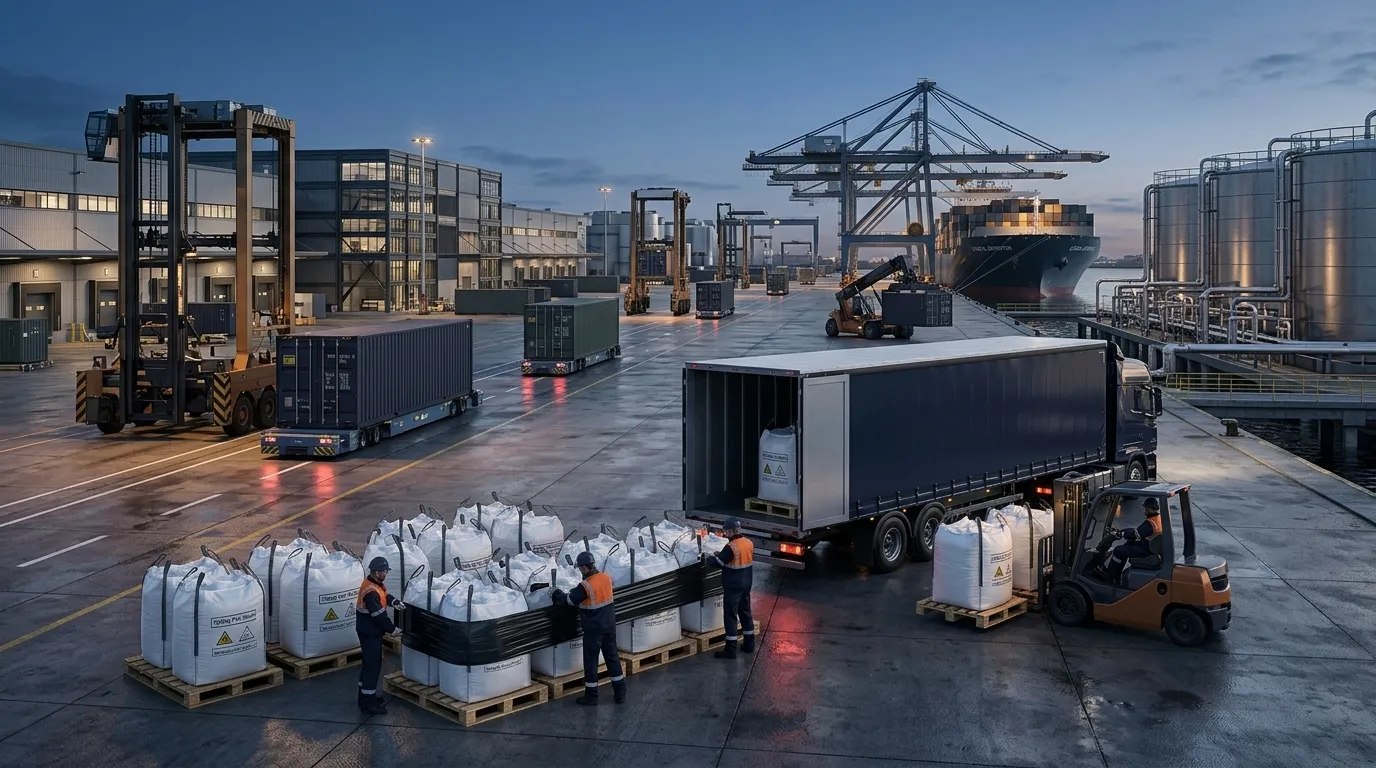
PVC resin is commonly packed in bags suitable for bulk industrial handling and international transportation.
Depending on the supplier and buyer's requirements, packaging may include:
Standard industrial bags
Different bag weights
Jumbo bags
Customized export packaging
The appropriate packaging depends on the buyer's storage, handling, transportation, and production requirements.
For a broader explanation of industrial packaging methods, see Packaging Options for Petroleum, Petrochemical & Industrial Products.
Packaging should be confirmed before the commercial offer is finalized, particularly when the cargo will travel through multiple stages of inland and international transportation.
Exporting PVC from Iran
For international buyers, the physical availability of PVC is only one part of the procurement process.
A successful export transaction may also involve:
Supplier coordination
Product inspection
Packaging confirmation
Loading arrangements
Inland transportation
Customs procedures
Export documentation
Port handling
International freight
Final delivery coordination
The optimal logistics structure depends on the origin of the cargo, destination, order volume, and selected Incoterm.
For example, a buyer may request FOB, while another buyer may require a freight-inclusive quotation such as CFR or CIF. These options can result in significantly different logistics structures and total landed costs.
For a detailed explanation of these trade terms, see FOB vs. CFR vs. CIF: Understanding Incoterms for International Buyers.
What International Buyers Should Ask Before Purchasing PVC
Before proceeding with a PVC transaction, buyers should verify several points.
1. Technical Specification
Ask for the complete product specification or Certificate of Analysis (COA), where applicable.
2. Origin
Confirm the actual production origin and, where relevant, the producing facility.
3. Available Quantity
Verify whether the requested quantity is available immediately or requires a production schedule.
4. Packaging
Confirm bag type, weight, palletization if applicable, and loading configuration.
5. Loading Location
The loading point can have a significant effect on inland transportation and export logistics.
6. Incoterm
Clearly define whether the quotation is based on EXW, FOB, CFR, CIF, or another agreed Incoterm.
7. Payment Terms
Payment conditions should be discussed and agreed before the transaction is finalized.
8. Inspection
For larger transactions, buyers may request third-party inspection or other quality verification procedures.
Choosing a Reliable PVC Supplier
Product quality and price are important, but international buyers should also evaluate the supplier's ability to consistently execute the transaction.
Important considerations include:
Product specification and consistency
Availability
Documentation
Packaging capability
Loading capacity
Export experience
Communication
Logistics coordination
Delivery capability
A supplier that can provide an attractive product price but cannot reliably coordinate loading, documentation, or transportation may create additional costs and delays.
For a more detailed discussion of supplier evaluation, see How to Choose a Reliable Iranian Supplier for Petroleum & Petrochemical Products.
PVC Supply Through an International Trading Partner
International buyers do not always purchase directly from a petrochemical producer.
A qualified trading and supply partner can coordinate different parts of the transaction, including product sourcing, commercial communication, packaging, inland transportation, export logistics, and delivery arrangements.
This can be particularly useful when the buyer is unfamiliar with local suppliers or needs to coordinate multiple stages of an international shipment.
At TAV PETROIL, PVC can be sourced according to the buyer's required specifications and commercial conditions. Buyers are encouraged to provide their required grade, technical analysis, quantity, destination, and preferred delivery terms so that suitable supply and logistics options can be evaluated.
From PVC Inquiry to Final Delivery
A typical PVC procurement process may follow these steps:
1. Product Inquiry
The buyer provides the required grade, specification, quantity, and destination.
2. Supplier & Product Verification
Available products are reviewed against the buyer's requirements.
3. Commercial Offer
Pricing, packaging, delivery terms, and other commercial conditions are discussed.
4. Documentation & Quality Confirmation
Technical specifications and required commercial documentation are reviewed.
5. Packaging & Loading
The cargo is prepared according to the agreed packaging and loading requirements.
6. Transportation & Export Logistics
Inland transportation, customs procedures, port operations, and international freight are coordinated according to the agreed Incoterm.
For more information about the logistics side of international shipments, see Cross-Border Transportation of Petroleum & Industrial Products from Iran.
7. Final Delivery
The cargo is delivered to the agreed destination or handover point.
This structured approach can reduce misunderstandings and help both parties establish clear expectations before shipment.
Why Buyers Should Compare More Than the PVC Price
The lowest quoted price does not necessarily represent the lowest overall procurement cost.
International buyers should consider the complete commercial picture, including:
Product specification
Product consistency
Packaging
Origin
Inland transportation
Port costs
Freight
Insurance where applicable
Customs and documentation
Delivery time
Payment conditions
The relevant figure for many importers is ultimately the landed cost, rather than the initial product price alone.
This is especially important when comparing offers from different origins or suppliers.
Conclusion
PVC remains an important raw material for construction, infrastructure, electrical, packaging, and numerous industrial applications.
For buyers considering PVC supply from Iran, the procurement process should begin with a clear technical specification rather than a product name alone. Grade, application, quantity, packaging, origin, Incoterms, and logistics requirements should all be established before comparing commercial offers.
With the right product specification and logistics structure, Iranian PVC can be considered as part of an international sourcing strategy for qualified industrial buyers.
TAV PETROIL supports international buyers with product sourcing, packaging coordination, transportation, and export logistics for petroleum and petrochemical products. To discuss a PVC requirement, buyers can provide their required specification, quantity, destination, and preferred delivery terms for further evaluation.
Frequently Asked Questions
What is PVC resin?
PVC resin is the primary polymeric material used to manufacture a wide range of rigid and flexible PVC products. It is processed into finished products through different industrial manufacturing methods.
What PVC grades are available from Iran?
The available grades depend on the producer, production schedule, and current market availability. Buyers should provide their required grade or technical specification so the appropriate product can be identified.
What information should I provide when requesting a PVC quotation?
At minimum, provide the required grade, technical specification, quantity, destination, packaging requirement, and preferred Incoterm.
Can PVC from Iran be exported internationally?
Yes. PVC is an internationally traded petrochemical product. The practical export route and logistics structure depend on the product origin, destination, quantity, applicable regulations, and agreed commercial terms.
What packaging is commonly used for PVC?
PVC resin is generally supplied in industrial bags, with the exact bag size and configuration depending on the producer and buyer's requirements.
Can TAV PETROIL arrange transportation for PVC?
TAV PETROIL can coordinate transportation and logistics as part of the supply process, depending on the agreed origin, destination, quantity, and Incoterm.