
Feedstock costs are one of the most important factors influencing petrochemical production economics.
Two feedstocks that frequently compete in global markets are naphtha and propane. Both can be used to produce important petrochemical building blocks, but they have different origins, product yields, logistics requirements and market dynamics.
In 2026, changes in crude oil prices, LPG availability, freight costs and petrochemical demand have made the relationship between naphtha and propane particularly important for producers and international buyers.
Understanding this relationship can also help buyers better understand changes in petrochemical prices and supplier quotations.
What Are Naphtha and Propane?
Naphtha
Naphtha is a liquid hydrocarbon stream primarily associated with crude oil refining. It is one of the traditional feedstocks used in steam crackers, especially in Asia and Europe.
Naphtha cracking can produce several valuable petrochemical products, including:
- Ethylene
- Propylene
- Butadiene
- Benzene
- Other aromatics
This broad product slate is one of naphtha's major advantages.
Propane
Propane is a major component of LPG and is produced through natural gas processing and oil refining.
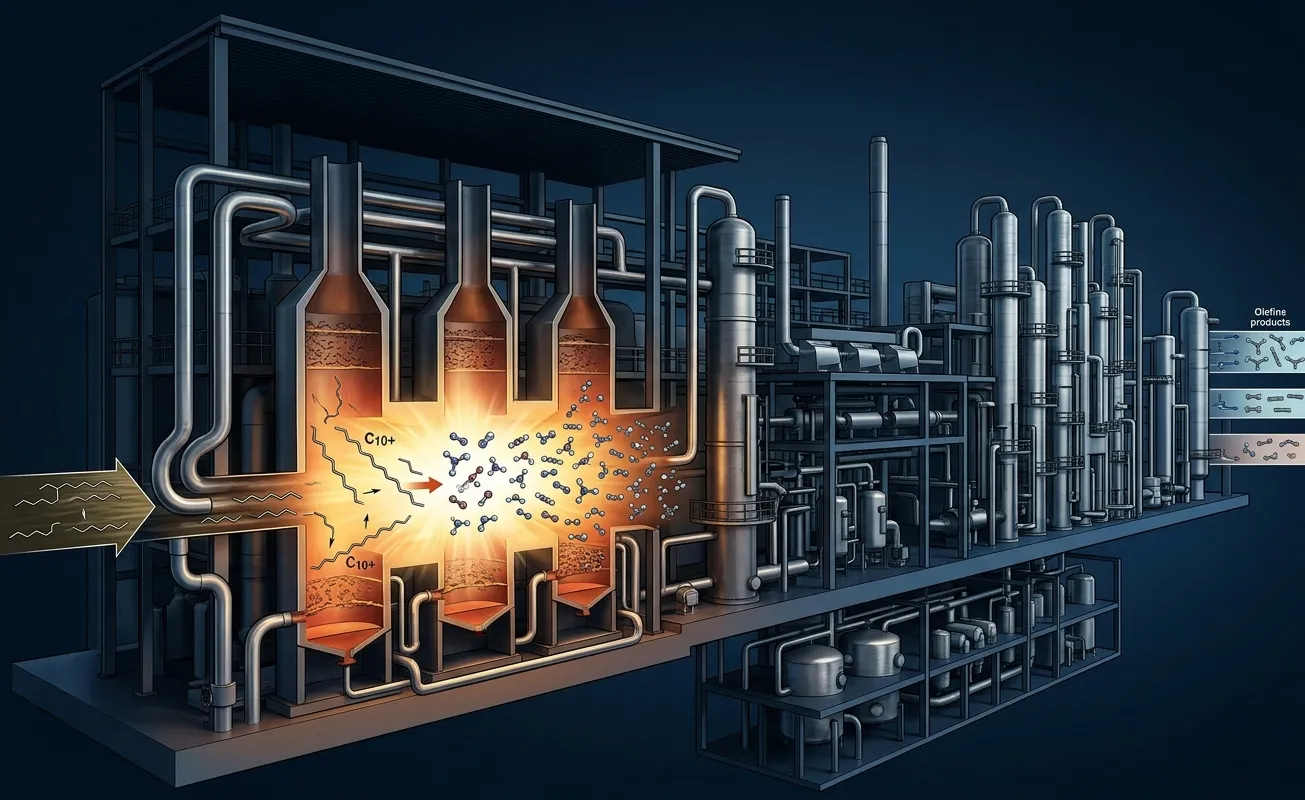
In the petrochemical industry, propane can be used as a steam-cracker feedstock or converted directly into propylene through propane dehydrogenation (PDH).
This makes propane particularly important for the propylene and polypropylene value chain.
Naphtha vs. Propane: What Is the Main Difference?
At a simplified level, the two feedstocks enter different production routes:
Naphtha → Steam Cracking → Ethylene + Propylene + Aromatics + Other Products
Propane → Steam Cracking → Ethylene + Propylene
Propane → PDH → Propylene
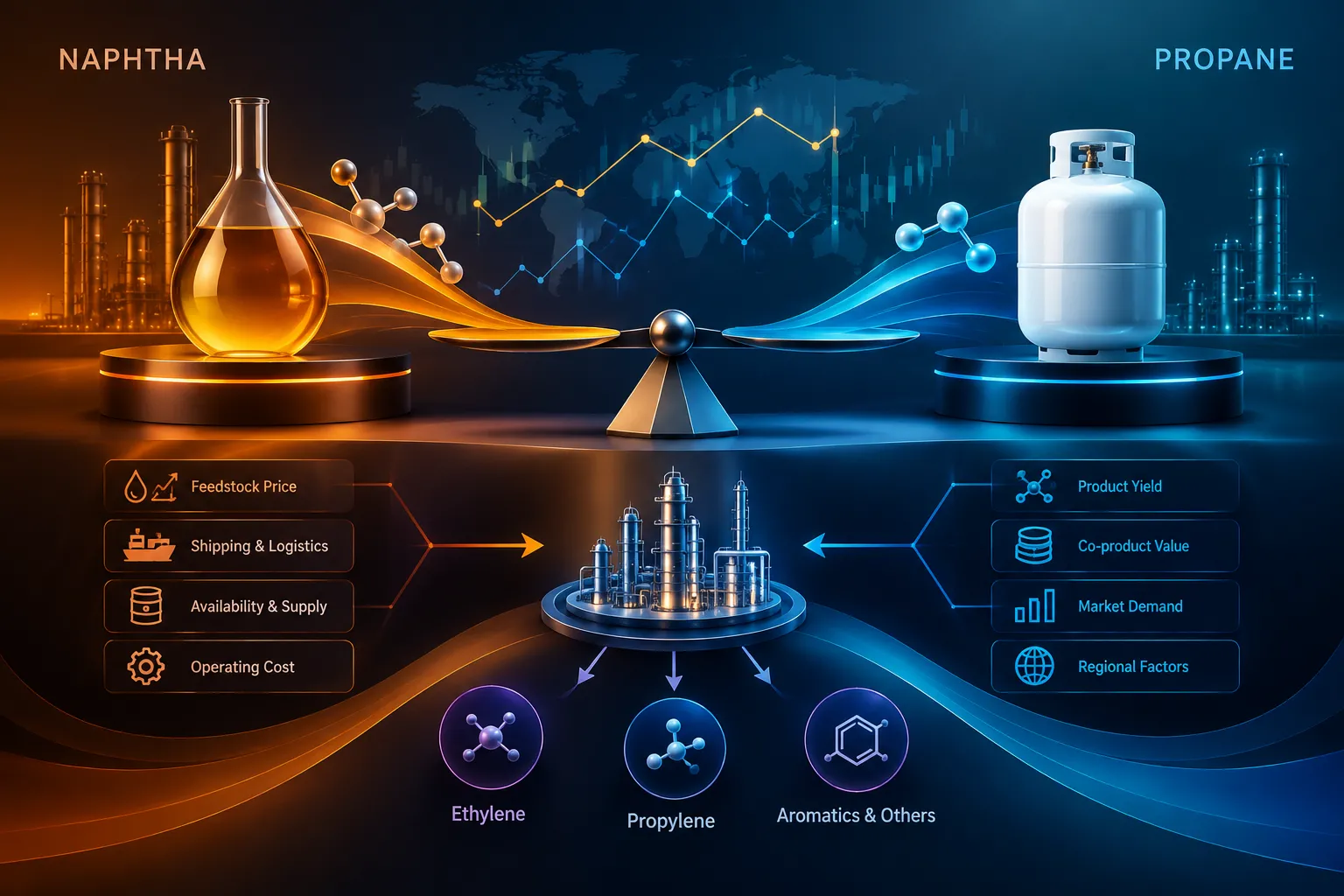
The important point is that feedstock price alone does not determine which route is more competitive.
Producers also consider:
- Product yield
- Co-product value
- Energy consumption
- Plant configuration
- Freight
- Feedstock availability
- Downstream demand
Therefore, the cheapest feedstock on paper is not necessarily the cheapest option after processing and delivery.
Why Petrochemical Feedstock Costs Matter
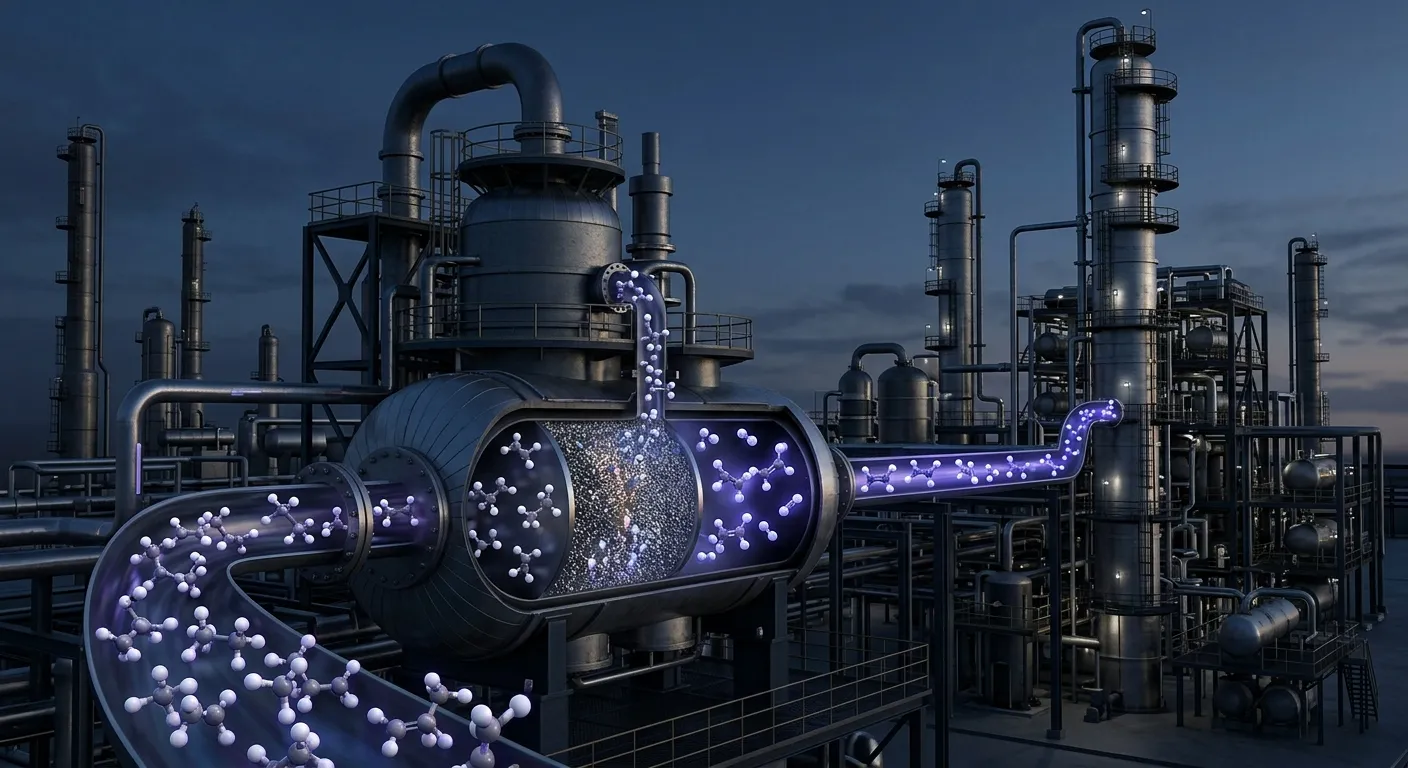
Feedstock can represent a major part of variable petrochemical production costs.
When feedstock prices rise, producers may experience:
- Higher production costs
- Lower margins
- Higher product prices
- Reduced operating rates
- Greater pressure to optimize feedstock selection
However, higher feedstock costs do not automatically result in higher petrochemical prices.
If downstream demand is weak, producers may have difficulty passing the additional cost to customers.
This is one reason why petrochemical market 2026 conditions cannot be understood simply by following crude oil prices.
Our recent analysis, How Rising Oil Prices Are Impacting Petrochemical Markets in 2026, looks at the broader relationship between energy prices, feedstocks, production costs and petrochemical markets.
How Crude Oil Affects Naphtha
Naphtha is closely linked to the refining sector, so crude oil prices are an important influence on its economics.
However, the relationship is more complex than:
Higher crude oil → Higher naphtha
Naphtha pricing can also be affected by:
- Refinery operating rates
- Gasoline demand
- Regional inventories
- Refinery outages
- Petrochemical demand
- Freight costs
- Alternative LPG feedstocks
This means petrochemical producers need to monitor both the crude oil market and the regional naphtha market.
For international buyers, this also helps explain why changes in crude prices may not immediately appear as equivalent changes in petrochemical quotations.
What Drives Propane Prices?
Propane has a different supply structure.
Its price is influenced by:
- Natural gas production
- Crude oil production
- LPG exports
- Seasonal demand
- Petrochemical demand
- Storage levels
- Shipping availability
- Regional supply and demand
Because propane is traded internationally, transportation can also have a significant effect on its delivered cost.
A lower benchmark price does not necessarily mean a lower final cost if freight, insurance, handling or other logistics expenses are higher.
This is the same principle international buyers should apply when comparing FOB, CFR and CIF quotations.
Why Propane Can Become More Competitive
Propane can become attractive when its price falls relative to naphtha.
This is particularly relevant for producers with flexible cracking systems or for facilities designed around propane-based production.
The comparison is therefore not simply:
Naphtha price vs. propane price
A better calculation is:
Feedstock Cost + Freight + Processing Cost − Product & Co-product Value
If propane becomes relatively cheaper while propylene prices remain supportive, propane-based production can become more competitive.
This is one reason PDH economics are closely watched in Asian petrochemical markets.
The Advantage of Naphtha: Product Diversity
One major advantage of naphtha is the range of products that can be produced from it.
A naphtha cracker can generate a combination of:
- Ethylene
- Propylene
- Butadiene
- Benzene
- Toluene
- Other hydrocarbon streams
This diversification can be valuable when different downstream markets have different price cycles.
A producer may therefore accept a higher naphtha cost if the total value of the resulting product slate remains attractive.
The Advantage of Propane: Propylene Production
Propane becomes particularly interesting when propylene economics are strong.
PDH plants are designed specifically to convert propane into propylene:
Propane → PDH → Propylene
Propylene is then used to produce:
- Polypropylene
- Propylene oxide
- Acrylonitrile
- Cumene
- Other chemical intermediates
For buyers of polypropylene and other propylene derivatives, understanding propane and PDH economics can therefore provide additional insight into upstream market conditions.
Naphtha vs. Propane in 2026
The 2026 market illustrates why feedstock economics need to be evaluated regionally.
Higher energy and feedstock costs can increase pressure on petrochemical producers, while weak downstream demand can limit their ability to pass those costs through to buyers.
At the same time, changing LPG availability and freight conditions can alter the relative competitiveness of propane.
This creates a constantly changing balance between:
Crude Oil → Naphtha
and
Natural Gas / Oil → Propane
followed by:
Naphtha / Propane → Ethylene & Propylene → Polymers & Chemicals
The result is that petrochemical prices can move differently from crude oil prices.
Why Freight and Availability Matter
A common mistake in international commodity procurement is comparing feedstock prices without considering logistics.
For example:
Supplier A: Lower FOB price
Supplier B: Higher FOB price but lower freight
Supplier B could ultimately provide the lower delivered cost.
The same principle applies to petrochemical products.
International buyers should consider:
- Product price
- Incoterm
- Freight
- Insurance
- Packaging
- Handling
- Destination
- Delivery time
- Availability
Our guide on Cross-Border Transportation of Petroleum & Industrial Products explains how transportation requirements can influence international industrial shipments.
TAV PETROIL also provides Transportation & Delivery solutions and Energy Logistics services, coordinating transportation, documentation and delivery requirements according to the shipment.
What Does This Mean for Petrochemical Buyers?
International buyers do not necessarily need to trade naphtha or propane directly.
However, monitoring feedstock markets can help explain movements in products such as:
- Polyethylene
- Polypropylene
- PVC
- Solvents
- Aromatics
- Other petrochemical products
A buyer should therefore look beyond the final product price and consider the upstream market.
For example:
Crude Oil → Naphtha / Propane → Ethylene / Propylene → Polymer → Buyer
Understanding this chain can make supplier quotations easier to evaluate.
For a broader procurement framework, see our guide on How to Evaluate a Petrochemical Supplier: 10 Things International Buyers Should Check.
What Should Buyers Monitor in 2026?
A practical petrochemical market checklist includes:
1. Crude Oil
Changes in crude prices can influence naphtha economics and overall energy costs.
2. Naphtha
Important for many steam crackers, particularly in Asia and Europe.
3. Propane
Important for LPG-based cracking and PDH production.
4. Ethylene
A key upstream indicator for polyethylene and several chemical chains.
5. Propylene
Essential for polypropylene and many chemical derivatives.
6. Freight
Transportation can significantly change the delivered cost of feedstocks and finished products.
7. Demand
Strong demand can support prices, while weak demand can limit producers' ability to pass on higher costs.
8. Inventories
High inventories can place pressure on producers even when upstream costs are rising.
Naphtha vs. Propane: Quick Comparison
| Factor | Naphtha | Propane |
|---|---|---|
| Physical form | Liquid | Gas/LPG |
| Main source | Oil refining | Gas processing & refining |
| Main route | Steam cracking | Steam cracking / PDH |
| Key products | Ethylene, propylene, aromatics | Ethylene, propylene |
| Main advantage | Broad product slate | Competitive olefin economics |
| Key exposure | Crude & refining markets | LPG & energy markets |
| Important consideration | Co-product value | Propylene economics |
There is no universal winner.
The more competitive feedstock depends on regional prices, plant technology, logistics, product yields and downstream demand.
How Feedstock Economics Affect International Sourcing
Feedstock volatility is another reason buyers should evaluate suppliers beyond the quoted unit price.
A reliable supplier should be able to clarify:
- Product specification
- Grade
- Origin
- Available quantity
- Lead time
- Packaging
- Incoterm
- Delivery destination
- Documentation
- Logistics options
TAV PETROIL supports international buyers with Oil & Petrochemical Supply, sourcing products according to required specifications, quantities and destinations.
For shipments requiring product preparation, buyers can also explore Packaging & Handling.
The objective is to evaluate the complete supply chain rather than simply compare a price per metric ton.

Conclusion
The naphtha vs propane comparison is becoming increasingly important for understanding petrochemical production economics in 2026.
Naphtha remains an important feedstock for steam crackers and offers a broad range of petrochemical products.
Propane can provide attractive economics for steam cracking and is particularly important for PDH-based propylene production.
Neither feedstock is always cheaper or better.
The real comparison depends on:
Feedstock Price + Availability + Freight + Processing Economics + Product Value + Demand
For international buyers, understanding these relationships can provide a better perspective on petrochemical prices and supplier quotations.
In a volatile market, the most useful question is not simply "Which feedstock is cheaper?"
It is:
"Which supply route provides the best overall economics for the required product and destination?"
Frequently Asked Questions
Is naphtha cheaper than propane?
Not always. Their relative competitiveness changes by region and market conditions. Buyers and producers should compare delivered feedstock economics rather than benchmark prices alone.
What is naphtha used for?
Naphtha is widely used as a steam-cracker feedstock to produce ethylene, propylene, butadiene, aromatics and other petrochemical streams.
What is propane used for in petrochemicals?
Propane can be used as a steam-cracker feedstock and as the primary feedstock for propane dehydrogenation (PDH), which produces propylene.
Why is PDH important?
PDH provides a direct route from propane to propylene, making propane particularly relevant to polypropylene and other propylene-based chemical markets.
How do feedstock costs affect petrochemical prices?
Higher feedstock costs can increase production costs and put pressure on margins. The final effect depends on demand, inventories, capacity, competition and producers' ability to pass costs to buyers.
Should buyers monitor naphtha and propane prices?
Yes. Even when buying finished petrochemical products, monitoring major feedstocks can provide useful context for price changes, supply conditions and supplier quotations.