
Beyond the Product: What Makes an Industrial Supplier Reliable?
When a business purchases petroleum products, petrochemicals, or industrial raw materials, the quoted price is only one part of the decision. The supplier's ability to deliver the agreed product, meet technical requirements, provide the necessary documentation, and coordinate shipment can have just as much influence on the outcome. A competitive offer may look attractive at first, but unexpected delays, unclear specifications, unsuitable packaging, or poor communication can create costs that were never included in the original quotation. For manufacturers, distributors, importers, and industrial buyers, choosing the right supplier is therefore about more than finding a product at the right price. It is about finding a business partner that understands the requirements of international trade and can coordinate the different stages of a transaction.
Price Matters, but It Is Not the Whole Picture
Price is naturally one of the first things buyers compare. However, two quotations for the same product may not cover exactly the same requirements. One supplier may quote a price that includes a particular packaging format, while another may calculate packaging separately. Freight, insurance, loading arrangements, documentation, and the agreed delivery terms can also affect the final cost.
This is why buyers should compare quotations on a like-for-like basis. Before making a decision, it is worth confirming:
Whether the product meets the required grade and technical specifications
The quantity available and the expected supply schedule
The packaging format and loading arrangements
The applicable Incoterms and delivery point
Which transportation, insurance, and documentation costs are included
The validity period of the quotation and the payment terms
The objective is not necessarily to choose the most expensive or the cheapest offer. It is to understand what each supplier is actually offering and how well it matches the purchasing requirement.
Product Quality Starts with Clear Specifications
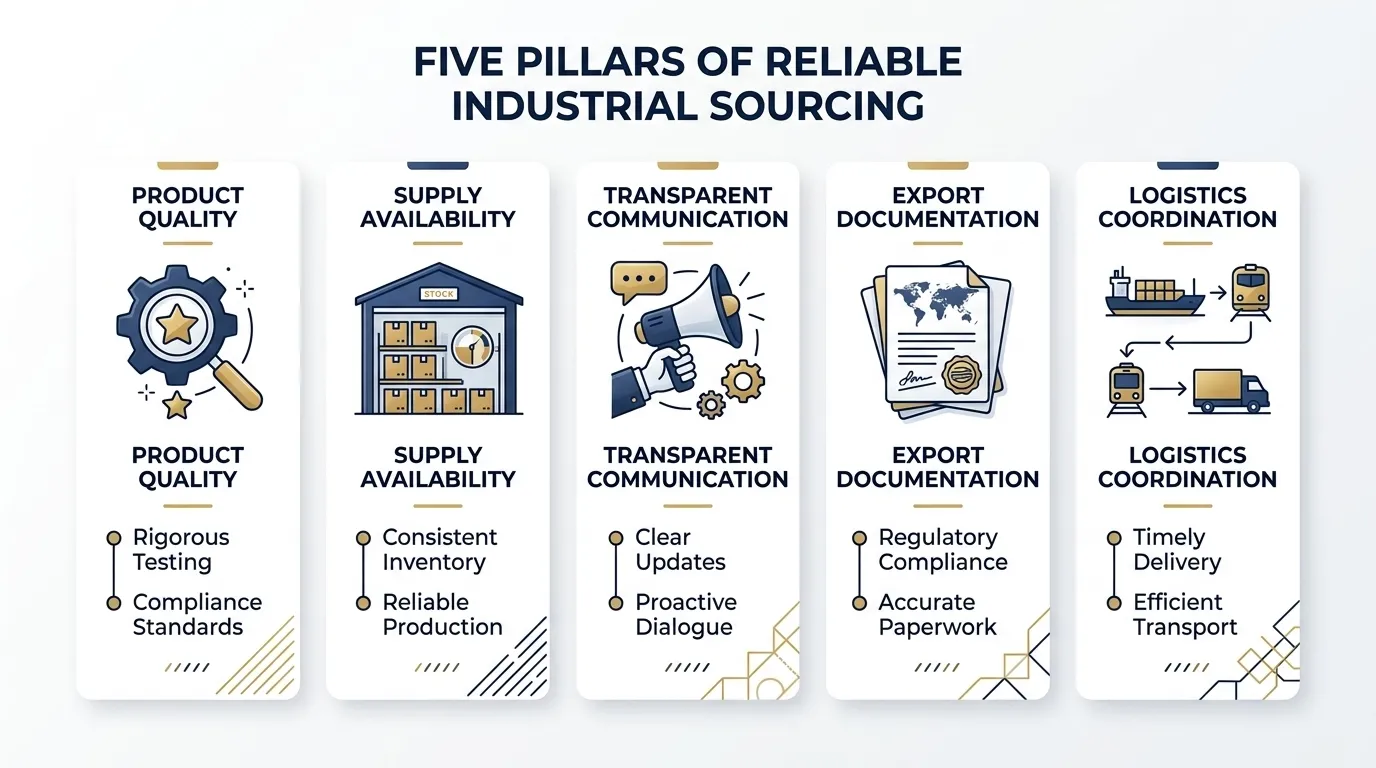
A supplier cannot reliably meet a requirement that has not been clearly defined. In industrial trade, product names alone are often insufficient to establish whether a material is suitable for a particular application. Depending on the product, a purchase specification may need to identify the grade, composition, viscosity, purity, moisture content, mesh size, test method, or other relevant technical parameters. Buyers should also clarify which documents will be provided to demonstrate conformity with the agreed requirements. For example, a buyer sourcing an industrial mineral may need a defined particle size and purity level, while a petroleum product purchaser may need to confirm viscosity, density, or other parameters relevant to its application. A clear specification reduces the risk of misunderstandings between the buyer, supplier, manufacturer, and inspection parties. It also provides a more objective basis for evaluating quotations and checking the delivered goods. Before confirming an order, buyers should establish which specifications are mandatory, which documents are available, and how any inspection or testing requirements will be handled.
Consistent Availability Is as Important as Quality
A supplier may offer a suitable product but still be a poor fit if its availability does not match the buyer's schedule. Industrial purchasing often involves production planning, inventory management, customer commitments, and transportation arrangements. A delay in one shipment can affect several activities downstream, particularly when the purchased material is essential to ongoing operations. Buyers should therefore ask practical questions about availability rather than relying on a general assurance that a product can be supplied. Is the material already available, or will it need to be produced? What is the expected lead time? Can the supplier support repeat orders? How will changes in the schedule be communicated? The answers will vary by product, origin, order size, and market conditions. A dependable supplier should communicate what is confirmed, what remains subject to verification, and when the buyer can reasonably expect an update. For companies operating in changing markets, this kind of communication is particularly valuable. As discussed in our article on petrochemical supply chains under pressure in 2026, supply chain conditions can influence procurement decisions well beyond the initial purchase price.
Communication Should Be Clear from the First Inquiry
The quality of communication during the quotation stage can reveal a great deal about how a supplier approaches business. A professional supplier should be able to discuss the requested product, identify missing information, explain the basis of a quotation, and clarify the next steps. If a specification is incomplete or a delivery requirement needs further checking, it is better to address the issue before an order is confirmed. Buyers should pay attention to whether responses are specific and consistent. Vague assurances, conflicting information, and repeated changes to important terms can make a transaction more difficult to manage. Clear communication also means being realistic. Availability, delivery dates, prices, and technical details should not be presented as guaranteed when they have not yet been confirmed. For international transactions involving several parties, it is helpful to establish a clear point of contact and agree on how important updates will be shared. This makes it easier to resolve questions before they become operational problems.
Packaging and Handling Are Part of the Supply Decision
Packaging is sometimes treated as a secondary detail, but it can directly affect storage, handling, transportation, and the condition of the delivered product. Depending on the material and shipment requirements, industrial cargo may be transported in drums, bags, jumbo bags, intermediate bulk containers, or bulk form. The appropriate option depends on the product's physical and chemical properties, the order quantity, available handling equipment, destination facilities, and applicable safety requirements. A packaging format that works well at the loading point may not be practical at the receiving facility. Buyers should therefore consider the entire journey rather than looking only at how the goods leave the supplier's warehouse. Before placing an order, confirm the agreed packaging type, unit weight, loading method, labeling requirements, and any special handling instructions. For sensitive or regulated materials, the relevant compatibility and transport requirements must also be checked. These details help align the product, packaging, and logistics arrangements before dispatch.
Documentation and Delivery Terms Need Early Attention
International industrial transactions involve more than the physical movement of goods. Depending on the product, route, destination, and contractual arrangement, the parties may need to coordinate commercial invoices, packing lists, certificates, transport documents, and other records required for the shipment. The exact requirements should be confirmed for each transaction rather than assumed to be the same across all destinations. Delivery terms also matter. Incoterms help define certain responsibilities between buyers and sellers, including aspects of delivery, risk transfer, and the allocation of specified costs. They do not, by themselves, replace the need for a clear sales contract or settle every question about payment, product quality, or ownership. Buyers should confirm the named place or port, the applicable Incoterm and version, the party responsible for each relevant cost, and the documentation required before the shipment moves. For cross-border cargo, route selection and border procedures may introduce additional considerations. Our guide to cross-border transportation of petroleum and industrial products from Iran explores some of the practical factors that businesses should consider when planning international deliveries.
Logistics Coordination Can Make or Break a Transaction
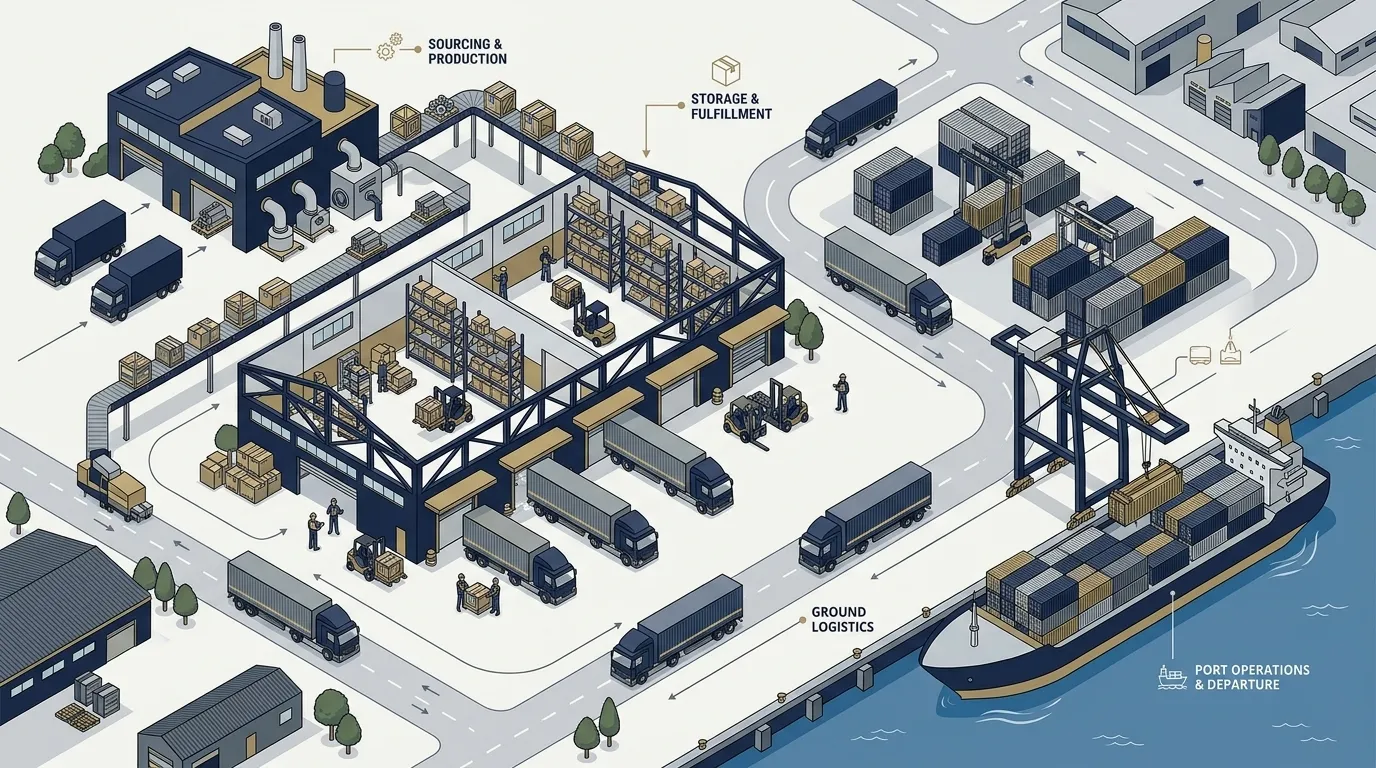
Even when the product, price, and documents are agreed, the shipment still needs to move according to a workable plan. Transportation choices depend on several factors, including the cargo type, shipment volume, origin, destination, available routes, handling requirements, and delivery schedule. Depending on the transaction, road, sea, rail, or a combination of transport modes may be appropriate. A reliable supply arrangement takes these factors into account before dispatch. It also considers how loading, storage, transit, border procedures, and final delivery fit together. Buyers should ask who will coordinate transportation, how shipment milestones will be communicated, and what procedures apply if a delay or route disruption occurs. These questions are particularly important when several service providers are involved. For businesses seeking a coordinated approach to cargo movement, it is worth reviewing the available transportation and delivery services alongside the product quotation. Evaluating supply and logistics together can help buyers make a more informed comparison between competing offers.
Understanding the Supplier's Role in International Trade
Industrial suppliers and trading companies can play different roles in a transaction. Depending on the arrangement, a company may supply goods directly, coordinate with manufacturers, help identify suitable products, or organize parts of the export and delivery process. Buyers should understand exactly what the supplier is responsible for and which activities depend on manufacturers, freight forwarders, inspection companies, or other third parties. This is especially important when sourcing several categories of products or working across multiple markets. The ability to coordinate information between the parties can help reduce avoidable confusion, but the scope of service should always be agreed in advance. International commodity trading is also influenced by broader market conditions, including feedstock availability, freight costs, demand, and regional supply imbalances. Our overview of the key factors shaping international energy markets provides additional context for businesses making purchasing decisions in the petroleum sector. The most useful supplier relationship is one in which responsibilities are understood, limitations are communicated honestly, and the buyer knows whom to contact when a question arises.
A Practical Checklist for Evaluating an Industrial Supplier
Before moving forward with a new supplier, buyers can use the following checklist to structure their evaluation.
Product and quality
Are the product grade and technical specifications clearly defined?
Can the supplier provide the agreed supporting documentation?
Are inspection, sampling, or testing arrangements clear where required?
Availability and commercial terms
Has product availability been confirmed for the requested quantity?
Are the lead time, quotation validity, payment terms, and delivery conditions clear?
Does the quotation explain what is included and excluded?
Packaging and logistics
Is the packaging suitable for the product and destination?
Have the loading method, transportation arrangements, and delivery point been agreed?
Are the responsibilities for freight, insurance, and other relevant costs understood?
Communication and documentation
Is there a clear contact for commercial and operational questions?
Are the required documents and their timing understood?
Does the supplier communicate uncertainties and changes promptly?
Verification and risk
Can the company and its commercial details be independently verified?
Are the proposed transaction, payment arrangements, and contractual terms consistent and transparent?
Have applicable import, export, sanctions, customs, and product-specific requirements been checked?
Not every transaction carries the same risks or requires the same checks. The appropriate level of verification depends on the product, destination, counterparties, and applicable law. For higher-value orders, buyers may also consider independent inspection, legal review, or additional counterparty checks.

How TAV PETROIL Approaches Industrial Supply
At TAV PETROIL, industrial supply is approached as more than a product quotation. The purchasing requirement, product specifications, packaging needs, and delivery arrangements all help define what a suitable offer should look like. The company's service portfolio covers petroleum and petrochemical supply, alongside transportation and delivery coordination. The appropriate arrangement depends on the product, destination, quantity, and requirements of each inquiry. Businesses exploring potential sourcing options can review our services and learn more about oil and petrochemical supply. For buyers with a specific requirement, providing complete information at the inquiry stage can make the initial assessment more productive. Product name and grade, quantity, destination, preferred packaging, technical specifications, and target delivery terms are useful starting points. Every inquiry should be assessed against its actual requirements and the availability of a suitable supply arrangement. Confirming these details early helps establish a clearer basis for discussing the next steps. If your business is evaluating supply options for petroleum, petrochemical, or other industrial products, you can contact TAV PETROIL to discuss your requirements.
Frequently Asked Questions
What is the most important factor when choosing an industrial supplier?
There is no single factor that applies to every purchase. Product conformity, availability, total delivered cost, documentation, logistics, and communication should be considered together. The relative importance of each factor depends on the product and the buyer's operational requirements.
How can a buyer verify an industrial supplier?
Buyers can review the company's legal and commercial details, verify contact information, request relevant product documentation, clarify contractual terms, and check references where appropriate. For higher-risk transactions, independent inspections and additional counterparty checks may be useful.
Why should buyers compare total delivered cost instead of product price alone?
A product quotation may exclude or separately charge for packaging, freight, insurance, handling, or other transaction costs. Comparing offers on the same delivery basis helps buyers understand the likely overall cost more accurately.
What information should be included in an industrial product inquiry?
A useful inquiry normally includes the product name, grade or technical specifications, required quantity, destination, preferred packaging, delivery terms, and target schedule. Any mandatory certificates, inspection requirements, or special handling needs should also be identified.
Why are packaging and transportation important when selecting a supplier?
Packaging affects handling, storage, and loading, while transportation determines how the cargo will move to its destination. Both need to be compatible with the product, shipment volume, delivery location, and applicable requirements.
Can one supplier coordinate both product sourcing and logistics?
Some suppliers and trading companies offer both services, while others handle only the product or work through third parties. Buyers should confirm the exact scope of service, the parties responsible for each activity, and any costs that are not included in the quotation.
How can businesses request a quotation from TAV PETROIL?
Businesses can contact TAV PETROIL through the contact page. Including the product specification, quantity, destination, packaging preference, and desired delivery terms helps the team understand the requirement and assess the appropriate next steps.