
Plastic waste is increasingly being viewed not only as an environmental challenge but also as a potential source of industrial raw materials.
For decades, the petrochemical industry has relied heavily on fossil-based feedstocks to manufacture plastics, resins and other chemical products. At the same time, millions of tonnes of plastic waste are generated every year, and a significant share is difficult to recycle through conventional mechanical processes.
This has increased interest in chemical recycling, a group of technologies designed to convert certain plastic waste streams into chemical building blocks, hydrocarbon feedstocks or other useful products.
In 2026, chemical recycling remains an important area of industrial research and investment. However, its commercial potential depends on more than the ability to process waste. Feedstock quality, conversion efficiency, energy consumption, product specifications, infrastructure and market demand all influence whether a project can operate successfully.
So, can plastic waste become a meaningful source of petrochemical feedstock?
The answer is yes, under the right technical and commercial conditions. But chemical recycling is not a universal solution for every type of plastic waste.
1. What Is Chemical Recycling?
Chemical recycling refers to processes that change the chemical structure of plastic waste or convert it into chemical intermediates that can be used to manufacture new materials.
Unlike mechanical recycling, which generally involves sorting, cleaning, shredding and remelting plastic while preserving its polymer structure, chemical recycling uses chemical reactions, solvents or thermal processes to recover useful materials.
Depending on the technology, the outputs may include:
-
Recovered monomers
-
Hydrocarbon liquids
-
Pyrolysis oil
-
Gaseous chemical intermediates
-
Other chemical feedstocks
-
Fuels or energy products
These outputs are not interchangeable. A liquid recovered from plastic waste, for example, is not automatically suitable for direct use in a petrochemical plant. It may require additional treatment, upgrading and quality verification before it can be used as industrial feedstock.
The key distinction is that chemical recycling aims to recover material value through chemical or molecular conversion rather than relying exclusively on the physical reprocessing of the original plastic.
2. Why Is Chemical Recycling Attracting Attention in 2026?
Several factors are contributing to interest in advanced plastics recycling.
Difficult-to-Recycle Plastic Waste
Mechanical recycling works particularly well with certain relatively clean and well-sorted plastic streams. However, contaminated, mixed or multilayer materials can be more difficult to process into high-quality recycled products.
Chemical recycling technologies may offer alternative routes for some of these materials, depending on their composition and the capabilities of the process.
Demand for Circular Raw Materials
Manufacturers and brand owners are exploring ways to incorporate recycled material into their products and supply chains.
For petrochemical producers, recovered feedstocks may create an additional route for sourcing carbon-containing raw materials, provided the material meets technical, regulatory and commercial requirements.
Product Quality Requirements
Some applications require tightly controlled material properties. Chemical conversion can potentially produce intermediates that are subsequently purified and used to manufacture new polymers.
However, achieving the required quality is not automatic. Contaminants, additives and degradation products must be managed throughout the process.
Regulatory and Traceability Requirements
Markets are increasingly concerned with the origin of recycled materials and the accuracy of recycled-content claims.
In 2026, discussions and regulatory developments around mass-balance accounting, chain of custody and recycled-content calculation are important to the commercial development of chemical recycling.
These factors make the technology relevant to the wider petrochemical industry, but they do not guarantee that every recycling project will be economically viable.
3. How Does Plastic Waste Become Petrochemical Feedstock?
The process depends on the technology used and the type of plastic entering the facility.
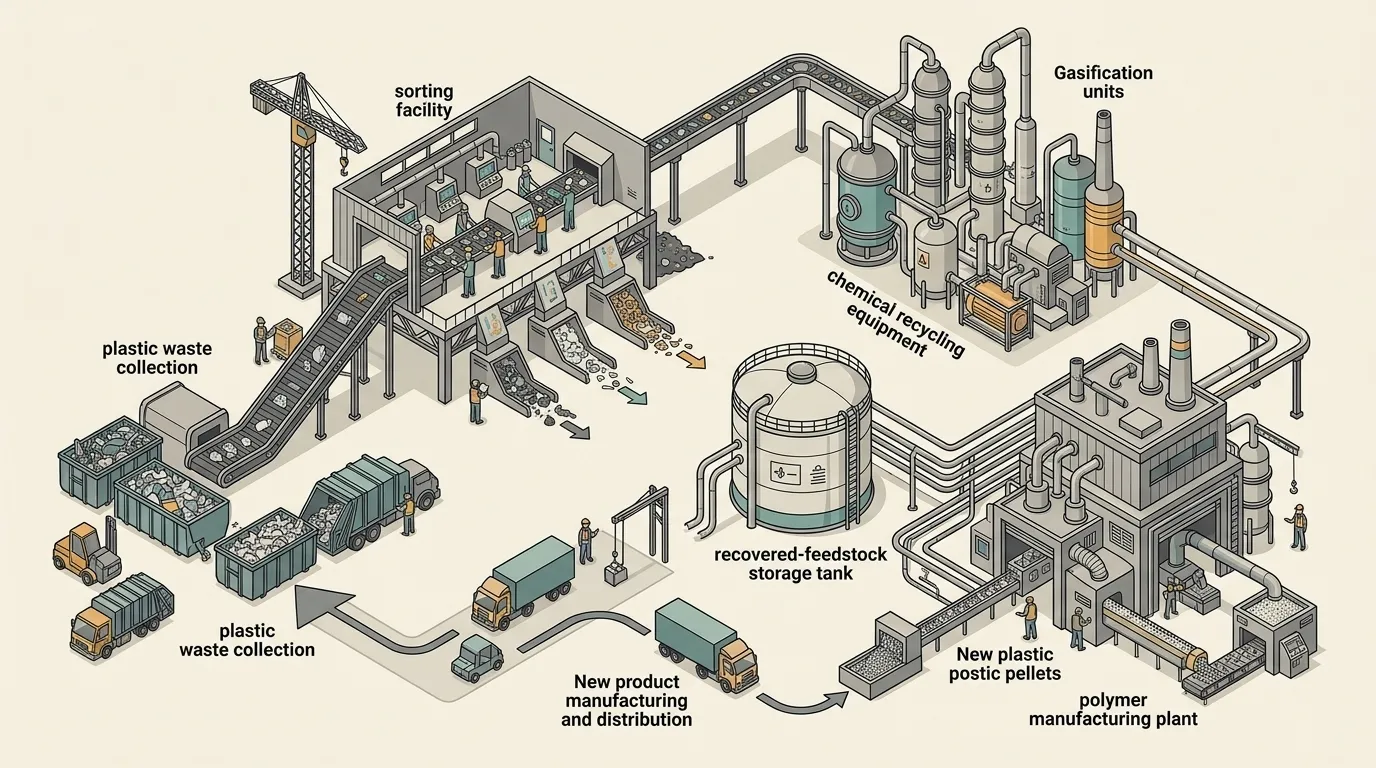
A simplified chemical recycling supply chain looks like this:
Plastic Waste → Collection and Sorting → Pre-Treatment → Chemical Conversion → Purification or Upgrading → Feedstock Qualification → Industrial Use
Each stage affects the quality and cost of the final material.
Step 1: Collection and Sorting
Plastic waste must be collected and separated according to the requirements of the recycling process.
Relevant factors include polymer type, contamination, moisture, labels, additives and the presence of incompatible materials.
A consistent incoming feedstock generally makes process control easier. Highly variable waste streams may require more extensive sorting and pre-treatment.
Step 2: Pre-Treatment
Depending on the material, pre-treatment may involve washing, drying, shredding, removing unwanted components and preparing the waste for the conversion process.
Poor pre-treatment can increase operating costs, reduce process efficiency or introduce contaminants into downstream equipment.
Step 3: Chemical Conversion
The prepared waste is processed through a suitable technology, such as pyrolysis, depolymerization or another chemical conversion route.
The technology determines which materials can be processed and what products can be recovered.
Step 4: Purification and Upgrading
The resulting material may contain impurities or compounds that prevent direct use in a chemical production process.
Further treatment may be required to adjust composition, remove contaminants or achieve the necessary quality.
Step 5: Quality Verification
Before recovered material is supplied to an industrial customer, its relevant properties must be evaluated against the receiving process's requirements.
Depending on the material, these may include composition, impurity levels, moisture, stability and other parameters specified by the buyer.
This final stage is particularly important when recovered material is intended to enter an established petrochemical production chain.
4. The Main Chemical Recycling Technologies
Chemical recycling is not one single process. Different technologies are suited to different polymers and waste streams.
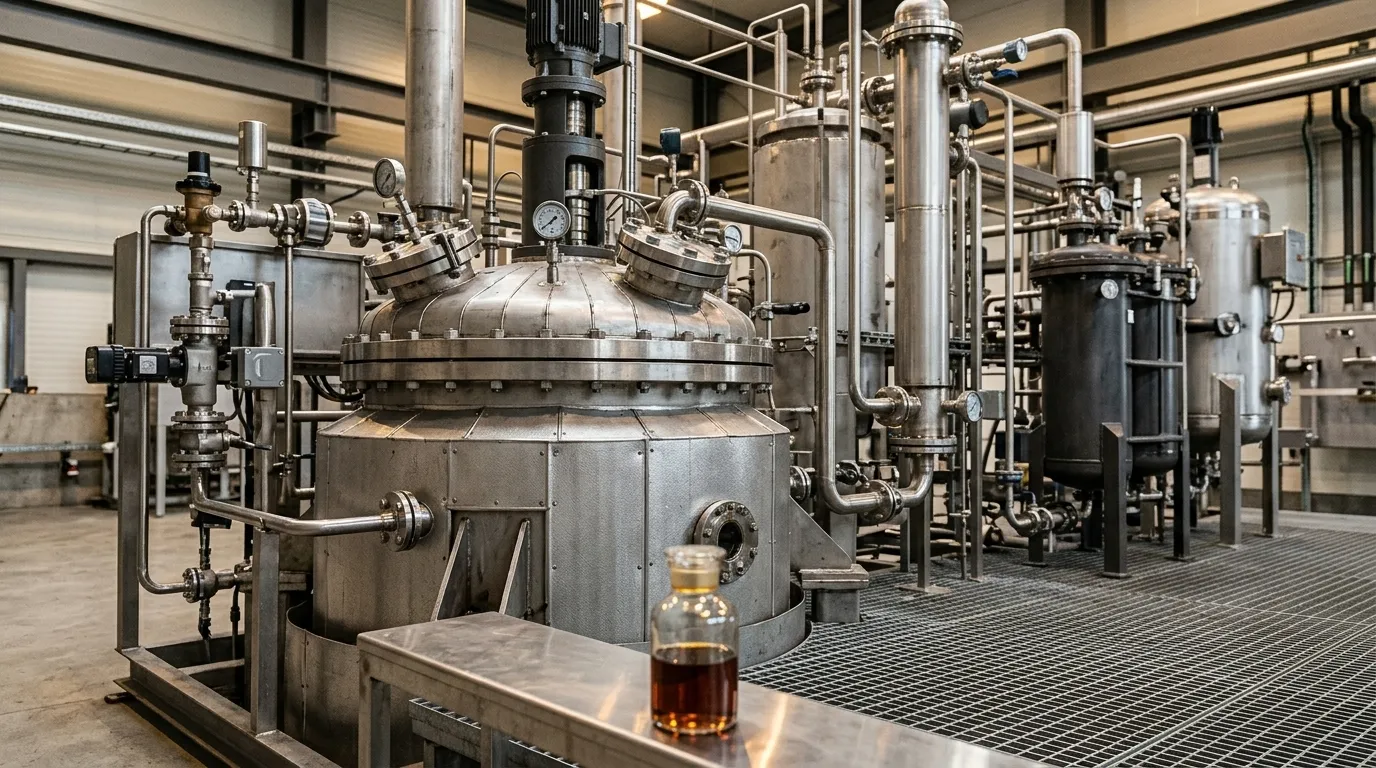
Pyrolysis: Converting Plastic into Hydrocarbon Products
Pyrolysis is a thermal process that breaks down suitable plastic materials at elevated temperatures, generally in an oxygen-limited environment.
Depending on the feedstock and operating conditions, the process can produce a mixture of liquid hydrocarbons, gases and solid residues.
The liquid product is often referred to as pyrolysis oil.
For selected plastic waste streams, pyrolysis oil may be upgraded and used as a feedstock for further chemical processing. Its suitability depends on its composition, contamination levels and the specifications of the receiving facility.
Potential applications include:
-
Recovery of hydrocarbon feedstocks from selected plastic waste
-
Production of intermediate materials for further processing
-
Integration with certain existing chemical production systems
However, pyrolysis oil should not be assumed to be equivalent to conventional naphtha or ready for direct use in every steam cracker.
Its properties can vary substantially with the waste composition and the process used to produce it.
Depolymerization: Recovering Chemical Building Blocks
Depolymerization aims to break certain polymers down into their constituent monomers or other reusable chemical intermediates.
This approach can be relevant to polymers whose chemical structures allow practical recovery of their building blocks.
Depending on the polymer, the recovered material may be purified and used in the manufacture of new polymer products.
The main challenges include achieving high recovery yields, separating impurities, managing additives and ensuring that the recovered chemicals meet the requirements for subsequent polymerization.
Depolymerization is therefore highly dependent on the specific polymer chemistry rather than being a universal method for all plastics.
Solvent-Based Recycling
Solvent-based methods use selected solvents to dissolve or separate components of a plastic material.
Some approaches focus on recovering the polymer while removing contaminants, additives or unwanted fractions. They do not necessarily break the polymer's chemical structure.
For this reason, solvent-based recycling is sometimes discussed alongside chemical recycling, although its classification depends on the process and the definition being used.
Its suitability depends on polymer compatibility, solvent recovery, energy demand, safety and the quality of the recovered material.
Gasification and Other Conversion Routes
Gasification converts carbon-containing materials into a synthesis gas, primarily containing hydrogen and carbon monoxide, under controlled conditions.
The resulting gas can serve as an intermediate for further chemical processing, depending on its composition and the downstream technology.
Gasification may handle some complex waste streams, but the process requires substantial technical infrastructure, gas cleaning and careful management of operating conditions.
The existence of multiple conversion technologies demonstrates why chemical recycling projects must be assessed individually rather than treated as a single standardized industry.
5. Chemical Recycling vs. Mechanical Recycling
Chemical recycling and mechanical recycling serve different purposes. The appropriate method depends on the plastic waste stream and the intended output.
| Factor | Mechanical recycling | Chemical recycling |
|---|---|---|
| Basic approach | Physical processing and remelting | Chemical or molecular conversion, depending on the route |
| Typical feedstock | Suitable, relatively clean and sorted plastics | Selected waste streams, including some mixed or contaminated plastics |
| Main output | Reprocessed polymer material | Monomers, chemical intermediates, hydrocarbon products or other outputs |
| Process requirements | Sorting, cleaning and material reprocessing | Conversion equipment and potentially extensive purification or upgrading |
| Main limitations | Polymer degradation, contamination and material incompatibility | Energy demand, conversion losses, process complexity and feedstock variability |
| Best application | When the polymer can be effectively recovered and reused | When a suitable chemical route provides value that alternative methods cannot achieve as effectively |
An important principle is that chemical recycling should not automatically replace mechanical recycling.
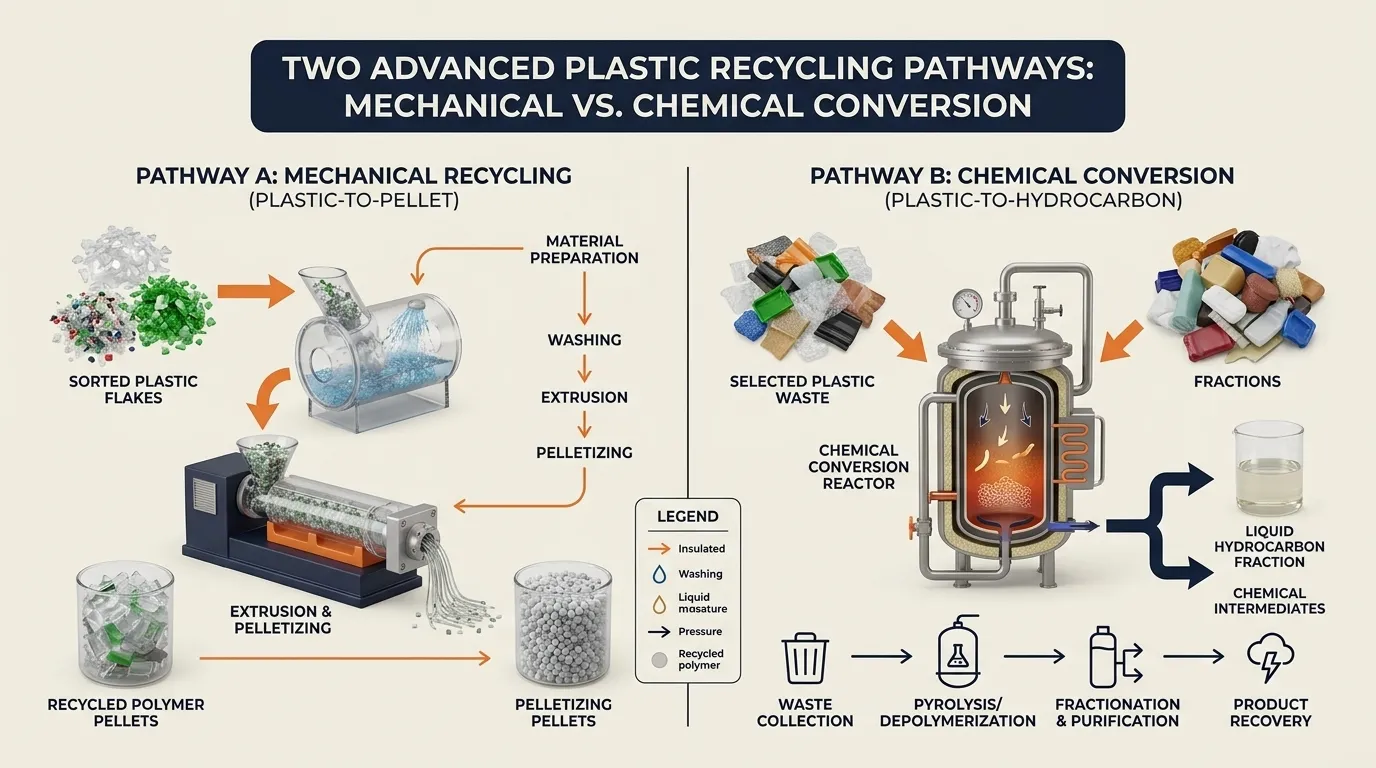
When plastic can be recycled mechanically into a suitable product with acceptable quality and environmental performance, mechanical recycling may be the more practical option. Chemical recycling can complement existing systems by providing additional pathways for selected materials that are difficult to recover through conventional processes. A well-designed recycling system considers the characteristics of the waste stream instead of relying on one technology for every application.
6. Can Pyrolysis Oil Be Used Directly in Petrochemical Plants?
This is one of the most important questions for the petrochemical industry.
The short answer is: not necessarily.
Conventional petrochemical feedstocks, such as naphtha, are produced and supplied with properties suitable for specific industrial processes.
Pyrolysis oil derived from plastic waste can have a different and more variable composition. Depending on the input material and process, it may contain unwanted compounds, including substances that affect processing performance or product quality.
Before a petrochemical producer accepts recovered oil, several questions need to be answered:
-
Is the chemical composition sufficiently characterized?
-
Are contaminants within the receiving facility's acceptable limits?
-
Is the material compatible with the relevant processing equipment?
-
Is additional hydrotreatment or other upgrading required?
-
Can the feedstock be supplied consistently?
-
Does the receiving facility have the necessary technical and operational capability?
For example, chlorine-containing contaminants can be a particular concern when mixed plastic waste includes PVC. Chlorine management and dechlorination may be necessary, depending on the feedstock and the process.
This illustrates why feedstock qualification is central to the commercial viability of chemical recycling.
A recovered material becomes commercially useful only when its quality, consistency and handling requirements align with the needs of its intended application.
7. The Economics: What Determines Whether Chemical Recycling Is Viable?
The technical ability to convert plastic waste does not automatically make a facility profitable.
Chemical recycling economics depend on both the cost of the incoming waste and the value of the recovered products.
Feedstock Collection and Preparation
Collection, sorting, washing, shredding and transportation can account for a meaningful share of total operating costs.
Waste streams that are difficult to sort or contain high levels of contamination may require additional processing.
Conversion Yield
The proportion of incoming material converted into a valuable product is a critical performance indicator.
Two facilities using broadly similar technologies may produce different commercial results because of differences in feedstock quality, operating conditions, equipment design and product recovery.
Energy Consumption
Heating, pumping, separation, purification and other operations require energy.
Energy prices and process efficiency can therefore have a direct influence on production costs and environmental performance.
Upgrading and Product Quality
If the recovered oil requires extensive purification before it can be used by a chemical producer, the additional treatment can reduce the economic advantage of recycling.
Product Offtake and Market Demand
A facility needs buyers for its recovered products.
Long-term commercial arrangements, acceptable product specifications and a clear route to market can be as important as the conversion technology itself.
If buyers are unwilling to pay a price that supports the recycling process, a technically successful project may still struggle financially.
Capital and Operating Costs
Specialized equipment, process controls, emissions management, maintenance and regulatory compliance can require substantial investment.
For these reasons, a project should be assessed using a full techno-economic analysis rather than relying solely on the potential value of the recovered oil.
8. Environmental Performance: Is Chemical Recycling More Sustainable?
Chemical recycling is frequently discussed as part of the circular economy, but its environmental benefits depend on how the process is designed and operated.
A meaningful assessment should consider the entire system, including:
-
Collection and transportation of waste
-
Pre-treatment requirements
-
Energy consumption
-
Process emissions
-
Conversion yields
-
Purification and upgrading
-
Management of residues
-
The products displaced by recovered materials
-
The alternative use or disposal of the original waste
A life cycle assessment (LCA) can help compare different scenarios.
For example, the environmental outcome may differ depending on whether a recovered intermediate is used to manufacture a new polymer, converted into fuel or used for another purpose.
It also matters what would otherwise have happened to the waste and which conventional material is displaced by the recycled output.
Recent scientific reviews have highlighted substantial variation in reported results because studies use different assumptions, system boundaries and methods for allocating environmental impacts.
Therefore, it is not accurate to claim that chemical recycling always reduces emissions or always performs better than mechanical recycling.
The strongest case exists when the technology recovers useful materials from an appropriate waste stream, achieves good yields, uses energy efficiently and produces outputs that genuinely replace other raw materials.
9. Mass Balance: How Can Recycled Content Be Tracked?
One challenge arises when recovered feedstocks are mixed with conventional fossil-based feedstocks in an integrated industrial facility.
After mixing, it may be difficult or technically impossible to identify the physical origin of every molecule in the final product.
Mass-balance accounting is one approach used to track and allocate eligible recycled inputs through a production system according to defined rules.
In simplified terms, the method records the quantity of qualifying input material entering a process and governs how that material can be attributed to eligible outputs.
However, mass balance is an accounting and traceability method. It does not mean that every individual product molecule can be physically identified as recycled.
For buyers and manufacturers, several questions matter:
-
What recycled input entered the system?
-
How was the material tracked?
-
Which accounting methodology was applied?
-
What outputs were eligible to receive recycled-content attribution?
-
Was the claim independently verified where required?
-
Does the methodology comply with the rules applicable to the target market?
In 2026, regulatory approaches to recycled-content accounting continue to be important to the development of chemical recycling supply chains.
Businesses should verify the rules relevant to their specific product, destination and intended claim rather than assuming that all mass-balance certificates or accounting systems are equivalent.
10. The Role of Quality Control and Traceability
A chemical recycling supply chain may involve waste collectors, sorting facilities, recycling plants, feedstock processors, petrochemical producers and downstream manufacturers.
Each stage introduces potential variability.
A robust quality-control system should establish clear requirements for incoming waste, intermediate products and final outputs.
Depending on the material, useful controls may include:
-
Defined feedstock acceptance criteria
-
Records of waste origin and composition
-
Batch identification
-
Representative sampling
-
Analytical testing
-
Documented operating conditions
-
Contaminant monitoring
-
Product specification limits
-
Traceability records
-
Procedures for non-conforming material
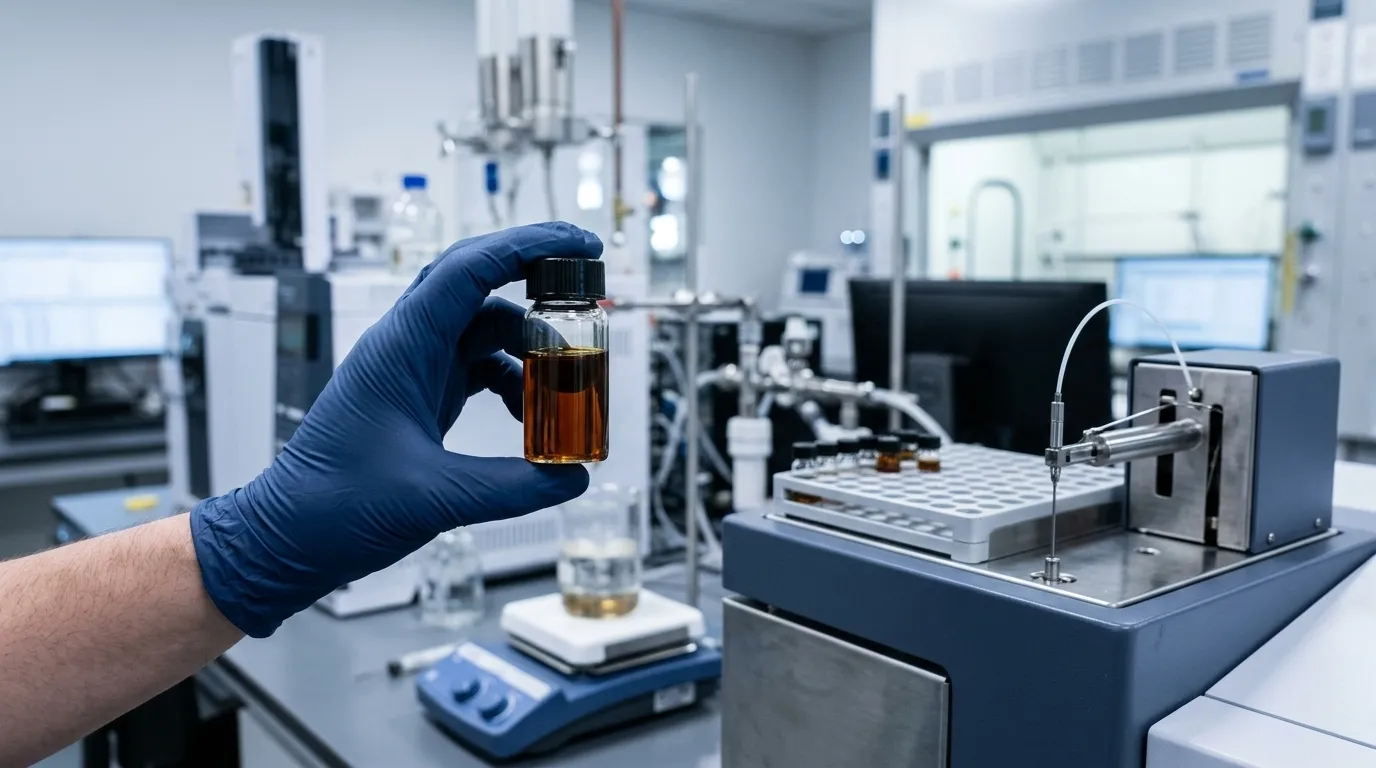
For the downstream buyer, the central question is whether the recovered material consistently meets the required specification.
This is a familiar principle across the broader chemical supply chain. Our guide on How to Evaluate a Petrochemical Supplier: 10 Things International Buyers Should Check explains why technical documentation, quality verification and supply capability matter when sourcing industrial materials.
11. What Could Slow Chemical Recycling Growth?
Despite its potential, chemical recycling faces several practical barriers.
Unstable or Unsuitable Feedstock
Recycling plants need sufficient quantities of waste with a composition suitable for their technology. Inconsistent input material can reduce efficiency and complicate quality control.
High Processing Costs
Collection, pre-treatment, conversion and purification costs may make recovered feedstocks more expensive than conventional alternatives.
Technical Scale-Up
A process that works under laboratory conditions may encounter different challenges when operated continuously at industrial scale.
Equipment reliability, process control, maintenance and product consistency must all be demonstrated.
Uncertain Demand
Chemical recycling projects need customers who can accept the recovered material and support the economics of production.
Demand may be constrained when the price premium for recycled products is greater than what buyers are willing or able to pay.
Regulatory Complexity
Rules governing waste classification, facility permits, product specifications, recycled-content claims and chain-of-custody systems can vary across markets.
Companies planning cross-border transactions must understand the requirements that apply to the waste, intermediate product and final material.
Environmental Trade-Offs
If a process consumes substantial energy or requires extensive upgrading, its environmental advantage may be limited.
The outcome depends on the specific technology, energy source, feedstock and products recovered.
These barriers do not mean chemical recycling has no future. They show that its growth depends on technical performance, commercially realistic projects and credible environmental accounting.
12. What Does Chemical Recycling Mean for the Petrochemical Industry?
For petrochemical producers, chemical recycling could create additional sources of carbon-containing raw materials and new relationships across the plastics value chain.
Potential areas of development include:
-
Integration of recovered feedstocks into existing production systems
-
Investment in feedstock purification and upgrading
-
Partnerships between waste-management and chemical companies
-
Development of traceable circular-material supply chains
-
Improved characterization of recovered oils and intermediates
-
Greater coordination between feedstock suppliers and polymer manufacturers
However, conventional fossil-based feedstocks are not likely to be replaced uniformly across all applications.
The speed and scale of adoption will depend on the availability of suitable waste, technology performance, production costs, buyer requirements and regulatory frameworks.
The wider petrochemical industry is also influenced by factors such as conventional feedstock prices, production capacity, freight and market demand. These commercial considerations will continue to shape how recovered materials compete with established raw materials.
For broader context, see How Rising Oil Prices Are Impacting Petrochemical Markets in 2026.
13. The Outlook for Chemical Recycling in 2026 and Beyond
Chemical recycling is moving through a period in which technical potential must be matched with commercial performance.
The most promising projects are likely to be those that begin with a clearly defined waste stream, select an appropriate technology and establish a reliable market for the resulting products.
Progress will depend on several developments:
-
Better feedstock preparation: More consistent input material can improve process control and reduce avoidable operating problems.
-
Improved conversion efficiency: Higher useful-product yields can support both economic and environmental performance.
-
Effective purification: Recovered materials must meet the requirements of their intended industrial applications.
-
Transparent traceability: Buyers need credible information about material origin and recycled-content claims.
-
Realistic commercial partnerships: Recycling facilities need dependable feedstock supplies and buyers for their outputs.
-
Evidence-based environmental assessment: Projects should demonstrate their benefits using appropriate life cycle and economic analyses.
Chemical recycling should therefore be viewed as one component of a broader plastics-management system that includes waste prevention, reuse, mechanical recycling and other appropriate recovery methods.
Its role will be strongest where it solves a clearly identified material-recovery problem rather than attempting to replace every existing recycling pathway.
Conclusion
Chemical recycling offers a potential route for converting selected plastic waste streams into monomers, hydrocarbon products and other chemical intermediates that can be used in industrial applications.
For the petrochemical industry, the opportunity lies in recovering useful material from waste and potentially integrating it into existing chemical production systems.
But successful implementation requires more than conversion technology. Feedstock quality, product specifications, process efficiency, energy demand, traceability, market demand and regulatory compliance all influence whether a project can deliver reliable results.
In 2026, the key question is no longer simply whether plastic waste can be converted into useful chemicals. It is whether the recovered material can be produced consistently, used safely, verified credibly and supplied at a commercially and environmentally justifiable cost.
That is the standard that will determine the long-term role of chemical recycling in the global petrochemical industry.
Frequently Asked Questions
What is chemical recycling of plastic waste?
Chemical recycling uses chemical, thermal or related conversion processes to recover monomers, hydrocarbon products or other useful intermediates from selected plastic waste streams.
What is the difference between chemical recycling and mechanical recycling?
Mechanical recycling generally reprocesses plastic while preserving its polymer structure. Chemical recycling uses conversion processes that can change the material's chemical structure or recover its constituent building blocks.
What is pyrolysis oil?
Pyrolysis oil is a liquid product generated when suitable materials, including certain plastic waste streams, are thermally decomposed under controlled conditions. Its composition varies, and additional treatment may be required before it can be used as a petrochemical feedstock.
Can pyrolysis oil replace naphtha?
Not automatically. Pyrolysis oil may be used as a potential alternative feedstock in suitable systems after its composition, contaminant levels and compatibility with the receiving process have been evaluated. Treatment and upgrading may be necessary.
Is chemical recycling environmentally friendly?
Its environmental performance depends on the technology, energy source, feedstock, conversion yield, emissions, transportation and the products displaced. A life cycle assessment is needed to compare specific recycling pathways fairly.
Which plastics can be chemically recycled?
The suitable materials depend on the technology. Certain polyolefin-rich waste streams may be suitable for pyrolysis, while selected polymers can be processed through depolymerization. Mixed plastics, additives and contaminants can complicate processing.
What is mass balance in chemical recycling?
Mass balance is an accounting approach that tracks eligible recycled inputs through an industrial production system and allocates them to outputs according to a defined methodology. It supports traceability but does not mean every molecule in a finished product is physically identifiable as recycled.
What are the main challenges facing chemical recycling in 2026?
Major challenges include feedstock consistency, conversion efficiency, energy consumption, capital and operating costs, product qualification, regulatory requirements and securing buyers willing to purchase the recovered materials.
Will chemical recycling replace conventional petrochemical feedstocks?
It is more likely to complement conventional feedstocks than replace them entirely in the foreseeable future. Its contribution will depend on the availability of suitable waste, technical performance, commercial economics and demand for recycled materials.